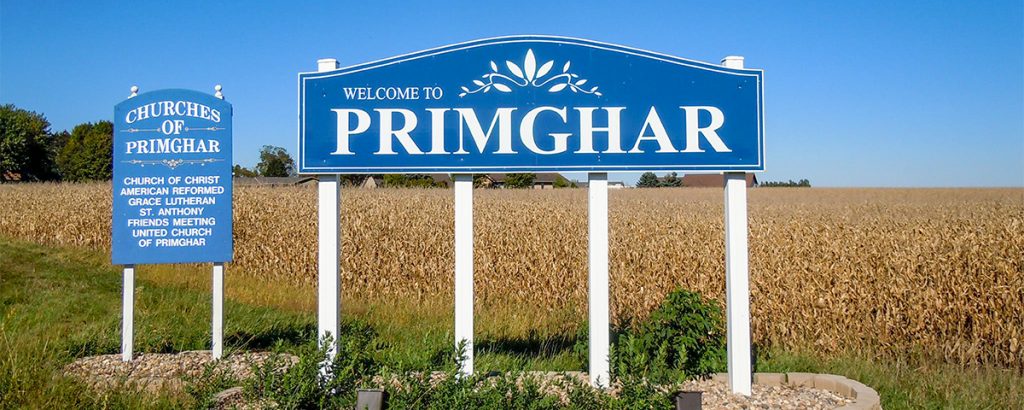
Welcome to Primghar!
Our unique blend of faith, family and heritage makes Primghar a great place to live, work and visit!
We are located on Highway 59, in the heart of Iowa’s farmland.
Agribusiness is vital to our community and surrounding area and it is what makes Primghar so vibrant!




Primghar's Founding Fathers
You may be wondering where the town name came from. Primghar is not a name you hear every day. The founding fathers of Primghar wanted a name that was interesting, and different from any other town, so they put together the first initial of their last names. The following poem was written to help remember the names of Primghar's Founding Fathers:

Pumphrey, the treasurer, drives the first nail
Roberts, the donor, is quick on the trail
Inman dips slightly, the fist letter in,
Green, thinking of groceries, gives the G
Hayes drops the H without asking a fee,
Albright, the joker, with his jokes all at par
Rerick brings up the rear and crowns all
And that is how Primghar was named!
Primghar is the shining star of O’Brien County! It has the conveniences of a bigger city, with that home-town feel. Come and see for yourself!